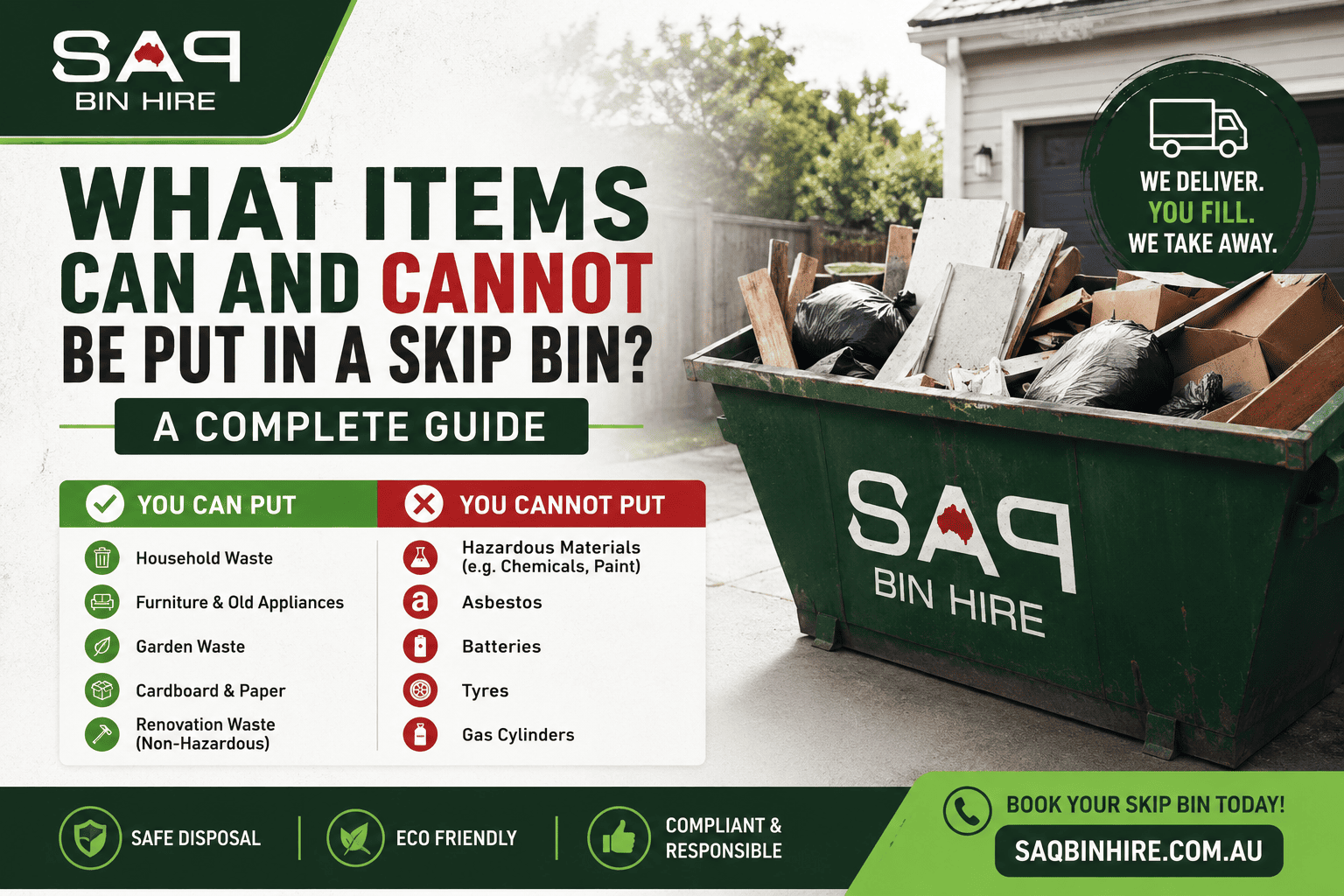
When you are doing a home renovation, cleaning up your garden, office waste or a construction project, hiring a skip bin will make your cleaning up easier. However, a lot of people don’t know what can be put in a skip bin and what is not allowed.
Knowing what can and what cannot be dumped in a skip bin will save you from extra changes, delays and other issues. Before you book a skip bin, it’s worth knowing the difference between acceptable and prohibited waste. This blog will tell you everything you need to know.
Why Knowing Skip Bin Rules Matters
Using a skip bin correctly is about more than just convenience. When the wrong materials are dumped in a skip bin, it can lead to contamination, safety risks and additional costs.
Many customers looking for affordable skip bin hire often assume that all waste can be mixed together, but this is rarely the case.
Items You Can Put In A Skip Bin
Most skip bin hire companies accept a wide variety of general waste materials.
Household waste
Common household items are usually accepted, including:
- Old furniture
- Toys and household clutter
- Clothing and textiles
- Cardboard and paper
- Non-hazardous plastics
Garden waste
A garden waste skip bin is ideal for:
- Grass clippings
- Leaves
- Small branches
- Weeds
- Shrubs and plants
Construction and renovation waste
Many customers use a skip bin rental service during renovation projects to dispose of:
- Timber
- Bricks
- Concrete
- Tiles
- Plasterboard
- Roofing materials
Office and commercial waste
Businesses frequently use commercial skip bin hire services for:
- Office furniture
- Packaging materials
- Shelving
- Non-electronic equipment
- General business waste
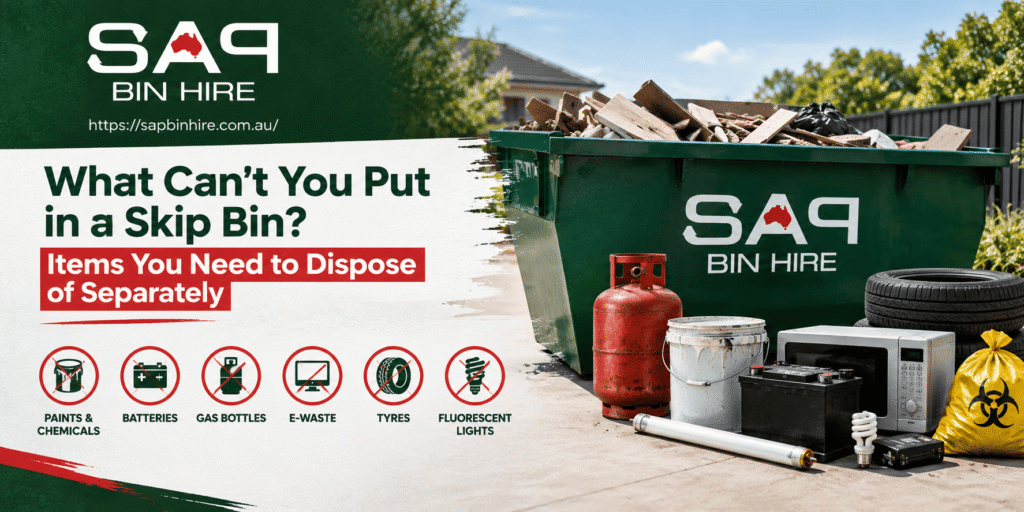
Items That Cannot Be Put In A Skip Bin
Certain materials require specialised disposal because they can be dangerous, toxic, or environmentally harmful.
Hazardous chemicals
The following items should never be placed in a standard skip bin:
- Paints and solvents
- Pesticides
- Cleaning chemicals
- Automotive fluids
- Fuel containers
These materials require approved hazardous waste disposal facilities.
Asbestos
Asbestos is heavily regulated throughout Australia. Most skip bin companies usually don’t accept asbestos unless it’s been specially requested.
Batteries
Household and industrial batteries contain chemicals which can be harmful to the environment.
Gas bottles and cylinders
Even empty gas cylinders can remain pressurised and create safety hazards during transportation and processing.
Medical and biohazard waste
Items such as:
- Needles
- Medical supplies
- Pharmaceutical waste
- Clinical waste
These items must be disposed of through authorised collection services.
Electronic waste
Many people are surprised to learn that e-waste often requires separate recycling. This includes:
- Computers
- TVs
- Monitors
- Printers
- Mobile phones
Always check with your skip bin hire company before disposing of electronics.
Common Mistakes To Avoid
When using a skip bin service, you have to avoid these common mistakes:
- Don’t overfill the skip bin till the brim of the bin.
- Do not mix hazardous items with general waste.
- Do not throw any of the prohibited items in these bins.
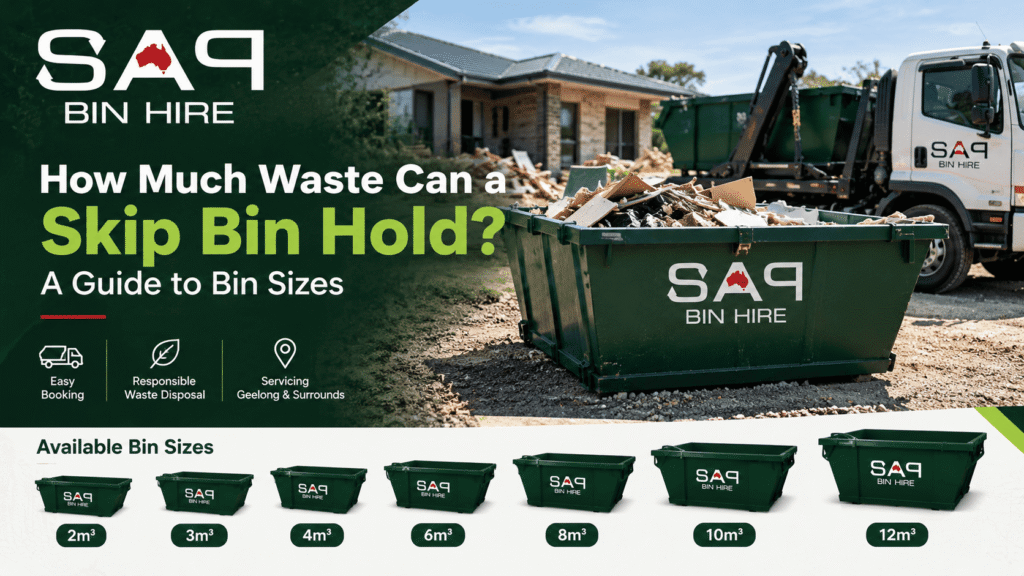
- Check the size of the skip bin before you get one.
How To Choose The Right Skip Bin
Different projects require different bin sizes and waste categories.
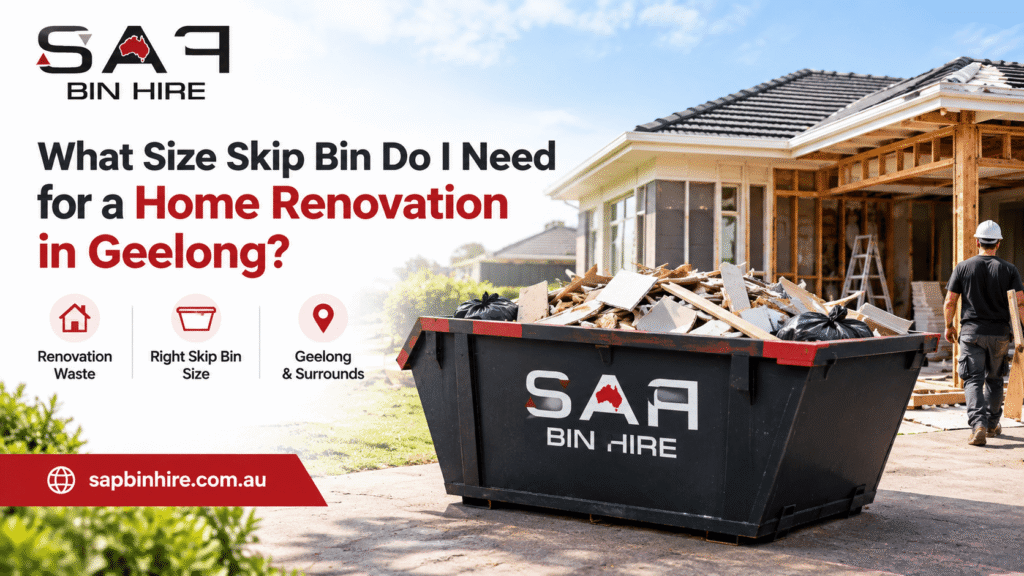
For household cleanups, a small general waste skip bin is enough. Renovation projects might require larger bins. For green waste, choosing a medium sized skip bin can be good.
FAQs
A. Yes, furniture is generally accepted as part of household waste and is commonly placed in skip bins.
A. Empty and dry paint tins may be accepted but tins containing liquid paint are generally prohibited.
A. Most providers account for weather conditions, but excessive water can increase weight and potentially affect disposal costs.
A. In many cases, yes. Because green waste can often be composted or recycled, disposal costs are usually lower.
Conclusion
Knowing what can and cannot be thrown in a skip bin can help you in avoiding unexpected costs and ensures waste is disposed of safely and responsibly. Whether it’s household waste, garden waste or construction materials, following skip bin guidelines makes the entire process more efficient.
Looking for reliable and affordable skip bin hire in Australia? Sapbinhire offers convenient skip bin rental solutions for residential, commercial and construction projects. Book a skip bin today.
Follow us on Instagram.